
History of CV Oww
The Sängerkreis Oberwesterwald was founded on 21 May 1949 in the ‘Hotel zum ‘Löwen’ in Westerburg.
However, the beginnings of the organized singer movement in the Oberwesterwald are already a long time ago and can be seen in the founding of the Oberwesterwälder Sängerbund and the Kreissängerbund Westerburg. While the Oberwesterwälder Sängerbund was founded on 22 February 1902 in the hotel "Zur Krone" in Hachenburg, almost two decades passed until the founding of the Kreissängerbund Westerburg in 1921.
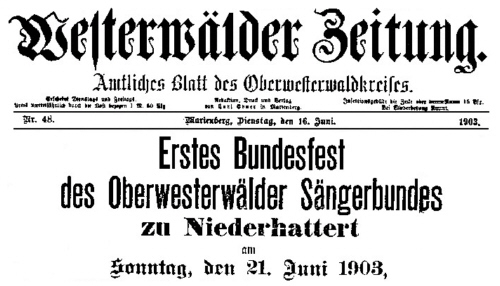
Although a copy of the ‘Westerwälder Zeitung’ reports on Tuesday, 16 June 1903 about the first federal festival of the Oberwesterwälder Sängerbund, unfortunately little is known about the continued existence of this singers’ association and other activities.
With the beginning of the First World War, the activity of the Oberwesterwälder Sängerbund rests until 1921. Until now, only men's singing clubs were represented in the Sängerbund. From 1922, mixed choirs were also recorded. At the beginning of the 20s, the choral system flourished. At the end of the decade, however, interest in the organisation of the singers' movement declined noticeably. In 1933, the Oberwesterwälder Sängerbund was dissolved.
The presidents of the Sängerbund Oberwesterwald were:
District administrator Robert Büchting, Marienberg
District Administrator Artur von Lucke, Marienberg
District Administrator Dr. Heinrich von Thon, Marienberg
Principal teacher Scheid, Alpenrod
Teacher Emil Schürg, Erbach
On the initiative of teacher Wilhelm Scherf, then choirmaster of the MGV ‘Konkordia’ Winnen, the Kreissängerbund Westerburg was founded in 1921 and is chaired by him. The newly founded Bund held its first scoring singing in Westerburg in November 1924. There are 21 clubs participating. The first Bundestag took place on 1 June 1925 in Pottum. The local men's singing club is consecrating its flag on this day. Beyond 1926, nothing is known about the Kreissängerbund Westerburg.
In the period of National Socialism, a reorganization of the choral system is ordered and regulated by the state. Several reorganisations lead to namings such as ‘Sängergruppe Oberwesterwald’, ‘Sängerkreis 10 Oberwesterwald im Gau 11 Nassau’, ‘Sängerkreis 3 Oberwesterwald’, ‘Sängerkreis 16 des Sängergaues 10 Hessen-Nassau’.
As a result of II. During the World War, the association's activities are almost completely extinguished.
Germany is largely in ruins after the capitulation on 8 May 1945. Surviving after the war has no humanistic ideals. Men of military age are in captivity, missing or fallen. Sadness and uncertainty characterize the mood. This is not a time to sing and be happy.
Three years after the end of the war, the worst supply difficulties have finally been overcome. The monetary reform puts an end to the economic hardship in Germany, which is hardly hoped for. People have new hope, confidence and courage to join in a new development. This also applies to the singers' movement and the organization of their community. Especially in rural areas, numerous choirs have already come together and started rehearsal work. The down-to-earth cultural life is increasingly stabilizing. As a result, the singing clubs gradually regain their traditional role in social life. The clubs come back into contact with each other and look together for binding answers. The singer circles are re-educating themselves.
It is Ewald Wüst from Westerburg who took the initiative in 1949 and invited the association representatives to the ‘Hotel zum Löwen’ in Westerburg for 21 May. It is the birth of the singers' circle Oberwesterwald. Ewald Wüst is also elected district singer leader (today chairman) by the delegates. 14 clubs initially join the new umbrella association of Oberwesterwald singers. With its foundation, the Sängerkreis Oberwesterwald joins the Sängerbund Rheinland-Pfalz, which was founded in Koblenz on 23 January 1949. With Franz Josef Kexel, who was elected district choir leader in 1972, the younger generation assumes responsibility. He recognizes that the training of young choirmasters is the most urgent task in order to offer conductors to the choirs. These thoughts continue to this day. In the mid-1970s, the first singers' balls, which enjoy great popularity, take place in the singers' circle. The municipal administrative reform in 1974, the Oberwesterwaldkreis and the Unterwesterwaldkreis are combined into a ‘Westerwaldkreis’, which has no influence on the singers’ circles. The two districts of Oberwesterwald and Unterwesterwald remain united in their independence in order to ensure optimal care. In the same year, the singers' circle Oberwesterwald in Erbach celebrates its 25th anniversary.
The musical direction will be transferred to Otto Eisel. The military musician, who had already conducted his home club, the MGV ‘Frohsinn’ 1912 Seck, in 1921, accompanied the office until 1956. In terms of area, the singers' circle Oberwesterwald is relatively large. At this time, the road conditions are very poor. It takes a lot of effort to visit the choirs and the meetings. Thus, the district board initially travels the paths on foot or by bicycle.
In 1956 Walter Höhn from Höhn took over the position of district choir conductor. Otto Eisel is appointed Honorary District Choir Leader. Under the direction of Walter Höhn, who holds the office until 1972, the musical level is greatly improved.
After Ewald Wüst, the group of singers is led by Albert Nold from Korb. He took office in 1963, but was forced to hand it over in 1968 for health reasons.
He is replaced by Ottmar Held, who has held the office for over 20 years.
In 1971, the first National Singer's Day took place in Bad Marienberg in the singers' circle Oberwesterwald.
With Franz Josef Kexel, who was elected district choir leader in 1972, the younger generation assumes responsibility. He recognizes that the training of young choirmasters is the most urgent task in order to offer conductors to the choirs. These thoughts continue to this day. In the mid-1970s, the first singers' balls, which enjoy great popularity, take place in the singers' circle. The municipal administrative reform in 1974, the Oberwesterwaldkreis and the Unterwesterwaldkreis are combined into a ‘Westerwaldkreis’, which has no influence on the singers’ circles. The two districts of Oberwesterwald and Unterwesterwald remain united in their independence in order to ensure optimal care. In the same year, the singers' circle Oberwesterwald in Erbach celebrates its 25th anniversary.
In 1985, Benni Hoffmann and Helmut Jung, two long-time members of the executive board of the group of singers, were adopted.
In 1991 there are again drastic changes in the board of directors of the group of singers
Heini Jung from Kölbingen replaces Ottmar Held and Karl-Wilhelm Dünnes from Westerburg-Gershasen is the new district choirmaster.
On the Central Day of Honour 1991 in Wahlrod, Ottmar Held is appointed honorary chairman and Franz-Josef Kexel honorary district choir leader. In 1996, the Sängerkreis Oberwesterwald is again responsible for the organization of the Landes-Sängertag, which takes place in Westerburg.
At the Kreis-Sängertag in Hachenburg in 2000, Heini Jung places the office of chairman in the hands of Dieter Zimmer from Steinebach an der Wied. The participants of the Singers' Day unanimously decided to appoint Heini Jung as honorary chairman.
In 2002, the singers' circle Oberwesterwald gives itself a new logo. The old coat of arms of the former Oberwesterwaldkreis and the Westerwald colours blue/grey were the inspiration for Ulrich Schlag's design.
The Singer's Day on 19 October 2003 in Hattert brings a small change to the board. After 12 years as district choir leader, Karl-Wilhelm Dünnes puts the office in the hands of his deputy Lieselene Schlaug-Pfeifer. With Joachim Klöckner from Kundert, the function of cashier is also newly filled.
The name change at the singers' day on 22.10.2005 in Stockum-Püschen, the singers' circle Oberwesterwald now carries the name “Kreis- Chorverband Oberwesterwald”.
In October 2006, new elections will take place on the occasion of the Singers' Day in Nistertal. The leadership of the Kreischorverbadesn receives a change. Dieter Orthey from Müschenbach is elected as the new chairman. The 2nd Chairman Ulrich Schlag, who cannot be present because of a stay in Klink, is no longer running for office for health reasons. His successor is Hubertus Ferger from Stockum-Püschen.
At the singers' day 2009 in Sainscheid, the former chairman Dieter Orthey receives 53 of 57 possible votes in a combat vote and is thus in charge of the district choir association Oberwesterwald for the next three years. His deputy is now Rüdiger Herling from Bellingen. His predecessor, Hubertus Ferger, resigned from the Executive Board for private reasons. The position of press officer will also be re-occupied: Jürgen Baum resigned from office for health reasons. Uli Schlag from Kölbingen has now taken over his task. Re-elected to the Board: Managing Director Lothar Riebel, district choir leader Lieselene Schlaug-Pfeiffer, active representative Monika Klöckner, treasurer Joachim Klöckner and child and youth officer Dorothea Raukes. Sheila Nagel is the co-chairwoman.
On the occasion of its 60th anniversary, the Kreis-Chorverband Oberwesterwald organizes a concert with sacred works in the Basilica of Marienstatt in November 2009. This demanding concert is designed by the Chorgemeinschaft Wahlrod, the Sängervereinigung 1852 Westerburg, the Mixed Choir Frohsinn Hirtscheid, the Mixed Choir Steinebach/Schmidthahn, the MGV Liederkranz Luckenbach, the MGV 1926 Müschenbach and the Mixed Allegro Singers from Müschenbach as well as Konstanze Pfeiffer on the organ. More than 600 people attend the concert. The donation proceeds from the event will benefit the youth and children's choirs of the district choir association Oberwesterwald.
History and development of CV Uww – 1921 to the 75th anniversary
(Chronicle of the choir association Unterwesterwald, on the occasion of the 75th Jubilee was created)
It was on November 24, 1921 in Wirges. In the hall of the inn ‘Krone’, the representatives of some men’s singing clubs from our homeland had gathered. The clubs belonged to the Gau Nassau of the Sängerbund Hessen-Nassau. The meeting had come about because many clubs complained about a neglect by the Gau Nassau and some grievances. After an in-depth discussion, it was concluded that only a detachment from the Gau would bring about an improvement, and so the formation of a group of singers was decided.
Unfortunately, as a result of the events of the last war, the protocols and records have been lost. However, it is known from oral tradition of some old singers that the association initially consisted of 26-28 clubs, Mr Rudolf Schmidt, Wirges, was elected chairman and Mr Andreas Himmerich, Wirges, as cashier and secretary of the assembly. Furthermore, Mr. Peter Simon from Niederelbert was a member of the board as chairman of the local group of singers.
When 2-3 years later Mr. Rudolf Schmidt resigned as chairman for professional reasons, Mr. Adam Schräder from Siershahn was elected chairman.
It was also during this period that the group ‘Wällerstein’ joined the clubs in and around Weroth, so that the circle now consisted of 45 – 46 clubs. Mr Adolf Pöhler from Montabaur became 2. Chairman, Mr. Josef Müller from Montabaur Kreischormeister and Mr. Kilian from Niederelbert, who had become group chairman instead of Peter Simon, and Mr. Eidt from Weroth as group chairman, members of the board. After a separation of the office of treasurer and secretary, Mr. Roos became Wirge's secretary.
One of the first major events was the meeting of the Nassau Singers' Association in Baumbach in 1922. The circle held its first critical singing in 1934 in Wirges.
At that time, the district had the designation ‘Sängerkreis VIII Westerwald im Gau XI Nassau’.
Thirty-five clubs participated in this critical singing, and the press wrote of the participation of nearly 3,000 singers.
It was not until 1936 that written documents and protocols concerning the group of singers were still available today. In 1936, the district executive, then called the district leader's council, consisted of the following singers:
1. Chairman (circle leader): Adam Schräder, Siershahn; 2. Chairman: Adolf Pöhler, Montabaur; District cashier: Andreas Himmerich, Wirges; District clerk: Ewald Hammer, Ransbach; District choirmaster: Josef Müller, Montabaur; Substitute and Music Advisory Board: Karl Marx, Eitelborn and Wilhelm Kirberger, Höhr-Grenzhausen; Press steward: Carl Brüggermann, Wirges; Auxiliary Managing Director: Ludwig Schräder, Siershahn; Group presidents: Group 1: Willy Ramb, Ransbach; Group 2: Johann Kilian, Niederelbert; Group 3: Kaspar Solbach, Ruppach-Goldhausen; Group 4: Arnold Müller, Höhr-Grenzhausen; Group 5: Hermann Schäfer, Maxsain;
Honorary Member: Peter Simon and Niederelbert.
The group of singers now called itself ‘Sängerkreis 9 Unterwesterwald’. In the same year, a choirmaster's course was held in Montabaur by the Gau choirmaster, Dr. Lange from Frankfurt. On 21.06.1930 a scoring singing was performed in Montabaur. 16 clubs from group 2 and 3 with a total of 568 singers took part. In 1937, the singers' day of the Sängergau Nassau took place on 23.05. in Montabaur in the morning, to which clubs all the way to the Frankfurt-Wiesbaden area belonged and about 2000 singers sent to the conference. On the same day, the group held a concert. In addition, 18 clubs of the district took part in the festival of the German Singers' Association in Wroclaw in the same year.
For reasons of age, Mr. Josef Müller resigned from his position as district choirmaster on 28.11.1937. He was succeeded by Karl Marx from Eitelborn, while Müller was appointed honorary district choir conductor. At the same time, instead of the music advisory board, a group choirmaster was appointed for each group, who belonged to the district board. This was for Group 1 Mr Holzchen, Eschelbach; Group 2 Mr Labonte, Arzbach; Group 3 Mr Reusch, Girod; Group 4 Mr Kirberger, Höhr-Grenzhausen; Group 5 Mr Bartsch, Marienrachdorf. In addition, Mr. Johann Eidt was appointed as the new Chairman of Group 3.
The circle at that time consisted of 67 clubs.
In 1938, the scorings of the remaining 3 groups were performed in Siershahn, Höhr-Grenzhausen and Maxsain. From the events of 1936 to 1938, one can see how active the singer's life was in our circle.
Many singers' festivals, scorings and other events were held.
Even in 1939, life was still lively at the beginning, but was already severely restricted by the impact of the war towards the end of the year. In the following years, the activity of the clubs declined more and more, until almost every activity had to be stopped.
It was not until 1949 that the group of singers revived.
On 28.05.1949 the representatives met in the journeyman's house in Montabaur; about half of the resurrected or newly founded clubs of the district.
In the meantime, a ‘Rheinland-Pfalz’ singers’ association had been re-established and the Federal Treasurer addressed the assembled representatives of the associations. The assembly decided to revive the ‘Unterwesterwald’ group of singers, which was dormant due to the war, and to join the ‘Rheinland-Pfalz’ group of singers.
Due to the war, many of the former district board members no longer lived and a new board had to be elected.
1. Chairman: Nikolaus Ferdinand, Untershausen; 2. Chairman: Willy Ramb, Wirges; Cashier: Erich Henkes, Wirges; Secretary: Adolf Pöhler, Montabaur; District choirmaster: Karl Marx, Eitelborn; Representative: Ernst Hebgen, Weroth; President Group 1: Willy Ramb, Wirges; President Group 2: Johann Kilian, Niederelbert; President Group 3: Johann Eidt, Weroth; President Group 4: Arnold Müller, Höhr-Grenzhausen; President Group 5: Hermann Schäfer and Maxsein
In 1950, the circle consisted of 53 clubs with more than 2,200 singers. In the same year, the first district festival after the war was held in Dernbach.
Already in 1952, the number of member clubs had risen to 70 and the group of singers 11 Unterwesterwald was the second largest in the singers' association Rhineland-Palatinate. It had 2,892 active and 2,047 passive members.
The newly elected music committee of the district this year consisted of the district choirmaster Karl Marx, Eitelborn, his deputy, Mr. Hebgen, Weroth and the group choirmasters of Group 1 Nikolaus Zimmermann, Dernbach; Group 2 Schubert, Montabaur; Group 3 Ernst Hebgen, Weroth; Group 4 Wilhelm Kirberger, Höhr-Grenzhausen; Group 5 Paul Rüb, Maxsain
In 1954 the first performance singing of the group of singers 11 Unterwesterwald took place on 09.05. in Montabaur. 19 clubs from the now 76 clubs of the district participated in this, with excellent performances were offered.
On November 18, 1954, the group of singers 11 hit a hard blow. The chairman, Nikolaus Ferdinand, died after a prolonged illness. He was succeeded as district chairman by Albert Schaaf, and for the retired district choirmaster Adolf Marx, Wilhelm Kirberger from Höhr-Grenzhausen took over the office of district choirmaster. The Assembly appointed Mr. Marx as Honorary Choirmaster and elected Mr. Solbach from Goldhausen as the 2nd Honorary Choirmaster. Chairman.
The Board of Directors was re-elected in 1957 and consisted of the
1. Chair Peter Ramb, Ransbach; 2. Chairman Paul Tisson, Hilgert; District treasurer Karl Herborn, Dahlen; Managing Director Albert Schaaf, Bannberscheid; District choir conductor Wilhelm Kirberger, Höhr-Grenzhausen; Representative Alfred Neuroth; Press officer Nink
as well as the 5 group presidents and 5 group choirmasters.
In the last 15 years, the district board has been very active, and it would be a mistake to list all the events, meetings, etc. of the district at this point. The most important, however, should not go unmentioned and were these:
the Circular Power Singing
1958 in Weroth,
1963 in Ransbach and
1967 in Dernbach,
the Kreissängerfeste
1956 in Wirges,
1961 in Siershahn,
1966 in Eitelborn
the District Performance Singing
1964 in Selters,
the State Singers' Day of the Rhineland-Palatinate Singers' Association
1960 in Höhr-Grenzhausen and
the Federal Choir Concert of the Rhineland-Palatinate Singers' Association
1965 in Höhr-Grenzhausen.
Here closes the chronicle (end of 1969), created by Sangesfreund and group chairman of the singer group IV, Klaus Lenners, Höhr-Grenzhausen.
History and development
(Chronicle of the singers' circle Unterwesterwald for the period 1970 to 1997)
Since hardly anyone is better informed about the club events or the highlights during the last 25 years in the choral system of our home country than our district chairman Willi Fries, he was ‘commissioned’ to compile the following chronicle.
The tradition-steeped ‘Sängervereinigung 1870 ‘Frohsinn’ Wirges’ was given direction on the occasion of its 100th anniversary. Under the brilliant direction of her then 1. Chairman Erich Henkes (he did not lead the powerful "happy", no, he "governed" the choir in the most positive sense!), the Kreischorfest in conjunction with the considerable anniversary - with the participation of 44 clubs - became an impressive demonstration for choral singing.
On this occasion, the chronicler recalls a lasting experience: On the occasion of the 75th anniversary of the MGV ‘Freundschaft’ Elgendorf in 1961, the 80-strong ‘Frohsinn Wirges’ stood on the stage and masterfully carried the choir ‘tailor-made’ for him: ‘The word echoes like a thunder!’.
And as if the sky had heard it, the irony of fate ? – Suddenly a huge storm over the marquee. The powers of heaven were not able to shake the tent, but the ‘voiced, great’ ‘happy’ !
1970 – the Board had invited to the annual meeting in Steinefrenz; This included a ‘37-year-old singer from Quirnbach’ who was to take over the vacant position of treasurer. On the same day, the position of 1. Presidents will be re-elected as Sangesfreund (SF) Peter Ramb – after 9 years in office – no longer ran. For his successor, a well-known personality from the choral system had already been found in the run-up to the election conference. But everything was different: From the meeting, the relatively unknown young singer (he had never been a member of the board before) was proposed as another candidate, and with a large majority, the meeting elected Willi Fries as the new chairman of the singers' circle Unterwesterwald (SK Uww). ‘Serve the land that gave you birth, for there is strength in your homeland; He has already lost himself, who does not create for his homeland !’
His first ‘act of office’ was then the passing of the well-deserved old SF Peter Ramb. At the suggestion of the new chairman, SF Peter Ramb was elected and appointed honorary chairman for his great services to the SK Uww.
On the occasion of its 50th anniversary, the Executive Board took the following view:
1. Chairman Willi Fries, Quirnbach; 2. Chairman Paul Tisson, Hilgert; District Treasurer Karl-Heinz Werner, Höhr-Grenzhausen; Managing Director Werner Fries, Höhr-Grenzhausen; District choir conductor Rudi Gelhard, Ransbach; Representative Wilhelm Kirberger, Höhr-Grenzhausen; Press officer Siegfried Friedrich, Wirges; Group President Gr. I Berni Hölzgen, Leuterod; Group President Gr. II Wolfgang Jäger, Neuhäusel; Group President Gr. III Josef Kaspari, Ruppach-Goldhausen; Group president, Gr. IV Klaus Lenners, Höhr-Grenzhausen; Group President, Gr. V Joachim Loppnow, Selters; Group choir leader Gr. I Günter Pörtner, Obererbach
Group choir leader Gr. II Alfred Wallroth, Arzbach; Group choir leader Gr. III Alois Sucke, Obererbach; Group choir leader Gr. IV Rudolf Gelhard, Ransbach; Group choir leader Gr. V Günter Schneider, Herschbach
An absolute highlight in the history of the SK Uww was the 50th anniversary. On the morning of October 24, 1971, a highly acclaimed ceremony took place in the auditorium of the Realschule Höhr-Grenzhausen, followed by a great festive concert in the afternoon.
The time of the 70s was fortunately under a real boom of the new foundation of children's and youth choirs. In more than 20 clubs, directors and choirmasters committed themselves, partly with passionate dedication and under great sacrifices of time, effort, financial effort and tried to preserve the offspring for their adult choirs through the special care of their children's choirs. However, in just a few years the majority of the hopeful young choirs came to a standstill. It was in particular due to the fact that no suitable choirmasters were found, that there was a lack of support from idealised supervisors – but unfortunately even of the necessary considerable financial resources.
Unfortunately, we have to note that of the first children's choirs today only the Children's Choir of Welschneudorf, founded in 1975, still exists after 22 years. How valuable the ‘maintenance’ of this adorable choir has ‘retired’ for the MGV ‘Eintracht’ Welschneudorf is shown by the fact that this children’s choir has produced a whole series of above-average singers, almost all of whom can also appear as soloists; Particularly noteworthy is the outstanding soloist Marco Kilian, who has already begun a hopeful career at the theatre of the city of Koblenz. Here I am also allowed once the great merits in the founding of the children's choir by the then chairman, our long-standing board colleagues and 2. Chairman SF Werner Meuer and the musical director, Alfred Wallroth, call Arzbach, who supervised this children's choir with rare dedication 10 years into old age.
During this period of boom for children's choirs, a number of highly acclaimed Kreiskinder choir concerts took place in the group of singers, according to the 1. Concert on the 9th. Nov. 1975 in Leuterod.
On 28 Nov. In 1976, the Friends of MGV ‘Cäcilia’ Ruppach-Goldhausen directed the 2nd Circle Children's Choir Concert. It followed on the 23rd. Oct. 1977 the 3. Circle Children’s Choir Concert, organised by the Friends of MGV ‘1875’ Nauort. On the 2nd Dec In 1979, MGV ‘Concordia’ Mogendorf, the organiser of the 4th Community concert of the children's and youth choirs of the SK.
Also in the 1970s, the start of the new performance competition of the Rhineland-Palatinate Association of Singers, the so-called ‘Meisterchor-Singen’. In a 3-stage choir competition (district performance singing, regional singing, master choir singing), the applicants have to face the judges under high demands. Only after successful participation in all 3 performance levels can the choirs bear the title of ‘Master Choir of the Rhineland-Palatinate Singers’ Association’ for 4 years.
I am justifiably proud to note that between 1976 and 1996, 26 choirs of the SK Uww won the coveted title of ‘Master Choir’ 43 times. With this great record, our group of singers in the Sängerbund occupies an absolute exceptional position! Particularly to mention: the MGV ‘Frohsinn’ Herschbach has already won the title ‘Meisterchor’ 4 times, the choirs of the MGV 1866 Eitelborn, MGV 1875 Nauort and ‘Frohsinn’ Wirges already 3 times.
Encouraged by these great successes, the SK Uww performed joint concerts of ‘his master choirs’ in Siershahn in 1979 and in Heiligenroth in 1992, which received considerable resonance and excellent criticism.
It honours the friends of MGV ‘Eintracht’ Siershahn for hosting the 3rd edition 4 times. The stage (final stage) of the master choir singing by the Sängerbund Rheinland-Pfalz was also a special honour for the MGV ‘Frohsinn-Arion’ Ransbach and the MGV ‘Eintracht’ Nentershausen, who were also able to arrange this special performance singing once.
A special highlight for the SK Uww was the honorable award of her 1. Chairman Willi Fries with the ‘Medal of Merit of the Order of Merit of the Federal Republic of Germany by District Administrator Dr. Norbert Heinen on 24 April 2006’. Jan 1981 on the occasion of a ceremony in the district house Montabaur.
Other highlights in the history of the SK Uww: the Kreissängerfeste 1975 in Nauort, 1980 in Ebernhahn and 1985 in Siershahn, all impressive demonstrations for the local choral singing.
Another unforgettable highlight for the SK Uww was the organization of the Landessängertag by the Sängerbund Rheinland-Pfalz on 20.03.1982 in Wirges. On the same day, Willi Fries was elected regional chairman and thus a member of the executive board of the Sängerbund Rheinland-Pfalz.
Thanks to the excellent support of the friends of the ‘Frohsinn’ Wirges, the ‘Thalianer-Chor’ Ebernhahn, the ‘Grau-Blau-Ballett’ Höhr-Grenzhausen, the high-quality singers’ day sounded unparalleledly harmonious in a happy round of singers (for the chronicler, the ‘most beautiful birthday of his life!’); unanimous tenor of the participants from all districts of the state of Rhineland-Palatinate: ‘One of the best singers’ days since the founding of the Rhineland-Palatinate Singers’ Association’.
The composition of the board of SK Uww has changed relatively rarely in the last 25 years, apart from the members we lost to death.
On 31 December 1983, Kreischorleiter Rudolf Gelhard resigned after 17 years of very good work. As a farewell, the district assembly gratefully awarded him the title of ‘Honorary Creative Director’. Successor to Rudolf Gelhard was the ‘blood young’ choirmaster Hubertus Weimer, Wallmerod, who soon helped to shape the choral scene by taking over several choirs, founding a great quartet (Lindenquartett Weimer), which was later followed by a larger selection choir (Kammerchor ‘Vocal Total’).
On March 13, 1994, an outstanding conductor from the German choral system died suddenly: ‘Our’ SF Hans Lingerhand, Ransbach-Baumbach. For more than four decades he had demonstrated choral singing in excellent quality with his choirs from Rhineland-Palatinate, Hesse and North Rhine-Westphalia.
At the 1995 Singers' Day in Montabaur, the function of the 2. Chairman amended by decision to ensure that the five group presidents are given equal priority to vice-presidents. Chairmen of SK Uww were appointed.
Board of SK Uww in the anniversary year 1997
| Chairman | Willi Fries, Helper's Churches |
| treasurer | Raimund Schäfer, Ruppach-Goldhausen |
| CEO | Herbert Malm and Weroth |
| Women's Officer | Walburga Lingerhand, Ransbach-Baumbach |
| Press Officer | Hermann-Josef Steinebach, Ötzingen |
| Youth Officer | Ute Lingerhand, Dernbach |
| choirmaster | Hubertus Weimer and Molsber |
| Stellv. choirmaster | Ulrich Wallroth, Arzbach |
| Group of singers 1 | Norbert Görg, Ebernhahn |
| Singing group 2 | Klemens Haberstock in Stahlhofen |
| Singing group 3 | Josef Kaspari, Ruppach-Goldhausen |
| Singing group 4 | Karl-Heinz Gelhard, Höhr-Grenzhausen |
| Singing group 5 | Ernst-Hermann Weißenborn, Selters |
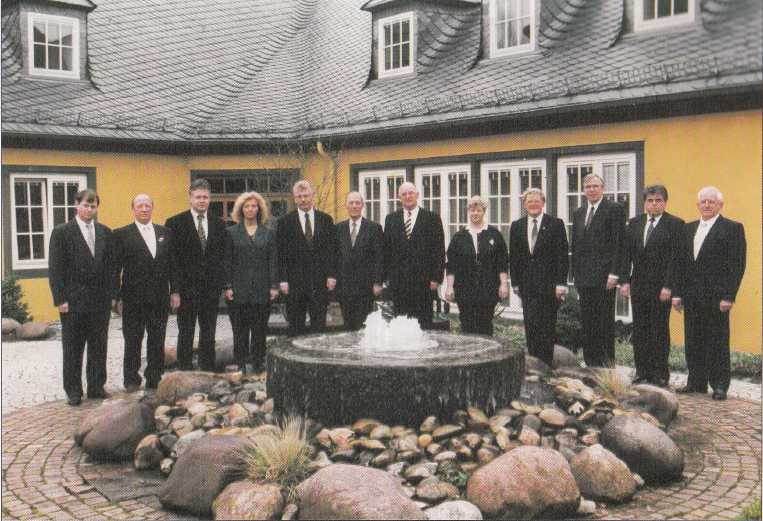
Executive Board of Sängerkreis Unterwesterwald in the anniversary year 1997 – from left to right Hermann-Josef Steinebach, Klemens Haberstock, Raimund Schäfer, Ute Lingerhand, Herbert Malm, Josef Kaspari, Willi Fries, Walburga Lingerhand, Norbert Görg, Ernst-Hermann Weißenborn, Ulrich Wallroth, Karl-Heinz Gelhard – Hubertus Weimer (photo Görg Montabaur) is missing.
The singers' circle Unterwesterwald was 75 years old in 1997. This birthday was also celebrated accordingly. On April 20, 1997, the group of singers invited the associations and many guests of honour from society, politics and business to a dignified ceremony in the Bürgerhaus Wirges. The festive day was concluded with a festive concert, also in the Bürgerhaus Wirges, in which renowned choirs from the group of singers presented the entire range of successful choral activities on the same day and thrilled the numerous visitors.
An era ended in 2001 – after more than 30 years as district chairman, Willi Fries resigned and was appointed honorary chairman. In the long period of his work, he had a decisive influence on the choral development in the singers' circle Unterwesterwald and represented well on all levels.
Hermann-Josef Steinebach was elected to succeed him as district chairman and was supported by an active board team. With Raimund Schäfer for finances, Franz Hindsches for management, Walter Frink for youth work and Mario Siry for musical responsibility, among others, a team was available that also broke new ground.
In a two-year rhythm, ChorAktiv was launched, an open-air choir event based on the motto ‘Actively experience and enjoy choral singing’, during which choirs from the group of singers present themselves in a relaxed form and actively promote choral singing. The special form was designed in such a way that it also addressed visitors who had not yet had any connection to choral singing and could take the opportunity to indulge in this pleasure for a self-determined period of time. With the integration of Open Singing, the visitors were also actively involved. This event has so far been held in the market or central squares of Montabaur, Ransbach-Baumbach and Bad Marienberg.
The children's and youth choir concerts also became a regular event, also in a 2-year rhythm, in which the children's choirs of the group of singers had the opportunity to present themselves to a wide audience. This children's and youth choir area is particularly close to the heart of the group of singers and is supported and promoted to the best of its ability. In the following years, considerations were repeatedly started as to whether it would not make sense to bring together the two independent groups of singers, later renamed choral associations on the initiative of the Rhineland-Palatinate Choral Association, in order to pool forces for the entire Westerwald, as well as on the political level.
These considerations were fleshed out in 2013, 2014. A project team dealt with the topic and prepared everything necessary for a merger. A new joint statute was developed, a merger agreement was drawn up and under notarial supervision the merger was carried out by the two independent district choir associations Oberwesterwald and Unterwesterwald to form the joint choir association Westerwald. In independent general meetings of Unterwesterwald and Oberwesterwald, the termination of independence was decided and in a subsequent joint general meeting the merger to form the joint choir association Westerwald was decided.
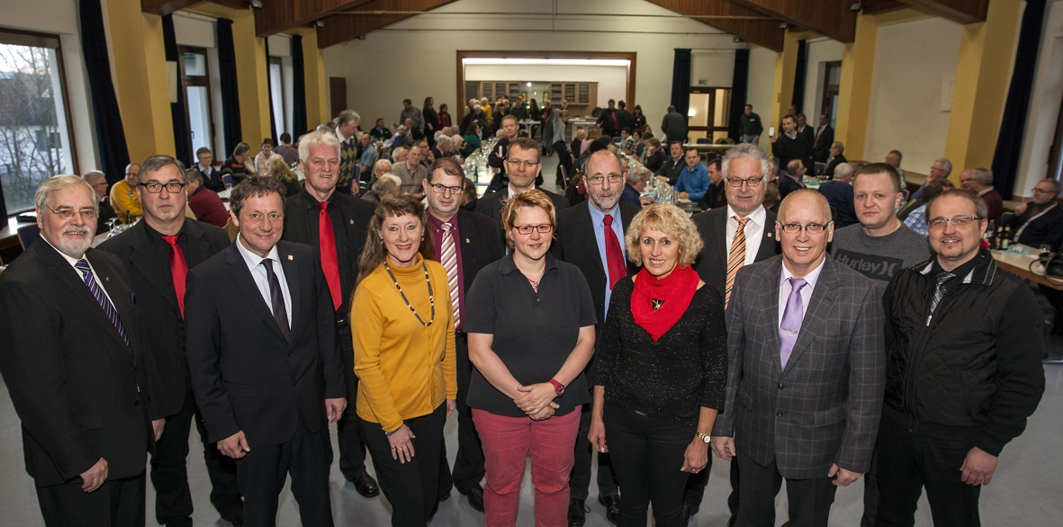
from left to right Karl Wolff (Pras CVRlp), Rüdiger Herling, District Administrator Achim Schwickert, Dieter Orthey, Heide Rupp, Hermann-Josef Steinebach, Notary Dr. Braun, Dorothee Hoffmann, Alfred Labonte, Lieselene Schlaug-Pfeiffer, Raimund Schäfer, Lothar Riebel, Timo Krämer, Mario Siry
The newly elected board consisted of the chairman Alfred Labonte, Horbach, the deputy Dieter Orthey, Müschenbach, the cashier Raimund Schäfer, Ruppach-Goldhausen, the managing director Lothar Riebel, Renneord and the deputy Timo Krämer, Obererbach, the musical director Mario Siry, Großholbach and the deputy Lieselene Schlaug-Pfeifer, Müschenbach and the active representatives Heide Rupp, Nordhofen and Dorothe Hofmann, Kundert. This fusion took place in Hachenburg and was honored musically with a secular and a church concert.
In the following years, the idea matured to create a large choir event for the entire Westerwald in addition to the previously initialized choir events such as ChorAktiv and the Children's and Youth Choir Concert. In 2019, it was time. The first one Westerwälder Chorfest was launched. For this you could not choose a better venue like the Stöffelpark in Enspel. The tender for the partial name was published and more than 50 choirs signed up for the partial name. At four venues in the Stöffelpark, open-air on the Natürbühne, or in premises such as the old smithy, you found an impressive location that is looking for its own. This choir festival became a large choir and family festival in which all choir areas of the Westerwald were represented and in which, with the support of the neighbouring choirs from Fehl-Ritzhausen, Hirtscheid and Stockum-Püschen, the physical well-being was also satisfied. Various offers had also been created for the little ones – an all-round successful event in which the weather also showed its best side. Mario Siry, as musically responsible, managed to coordinate the performances perfectly with an exact performance plan for four stages in parallel. In addition to the presentation of the choirs, the program also included several workshops and open singing, in which the visitors were also involved. The response was so good that it was clear that this Westerwälder Chorfest should not remain a one-off event. The corona crisis, starting in 2020, severely affected choral singing for the next two years. Due to the prohibition of meetings and later by decreed distance bids, many choirs refrained from regular rehearsal work and set their activities to a pause state. However, many choirs also used alternatives, such as online samples, samples with minimum distance, when public rehearsals were again possible under these conditions. All in all, it was a difficult time for social interaction and choral singing in particular, and many choirs also explicitly lost active members as a result. In the years from 2022 onwards, the situation returned to normal and the organisation of choral events also increased again, although it took a long time to return to a reasonably normal state.
In this post-Corona period, the festivities for the 100th anniversary of the choir association Westerwald also fell. The project team set up for this purpose had come up with various events to celebrate and honor the approximately 100th anniversary accordingly. In June 2022, an anniversary reception was held with club representatives and invited guests from society, politics and business followed by an anniversary concert with representative choirs of the choir association in the Bürgerhaus Wirges. The following day, as a family day, was dedicated to choir presentations of children's, youth and adult choirs and a cosy get-together in a family atmosphere. In November 2022, the ev. Church in Kirburg held a great church concert. June 2023 was all about the 2. Westerwälder Chorfestes in the Stöffelpark, in which more than 50 choirs present themselves in parallel on 4 different stages and the attendance was even greater than at the 1. Westerwälder Chorfest, so that the parking facilities in the Stöffelpark reached their limits. Another great choir family day with the best advertising for choral singing and the community of choirs. The festive activities for the 100th anniversary were concluded with the concert of Maybebop, a well-known A-Capella quartet in the Stadthalle Ransbach-Baumbach, an impressive conclusion to the event activities for the 100th anniversary of the choir association Westerwald.
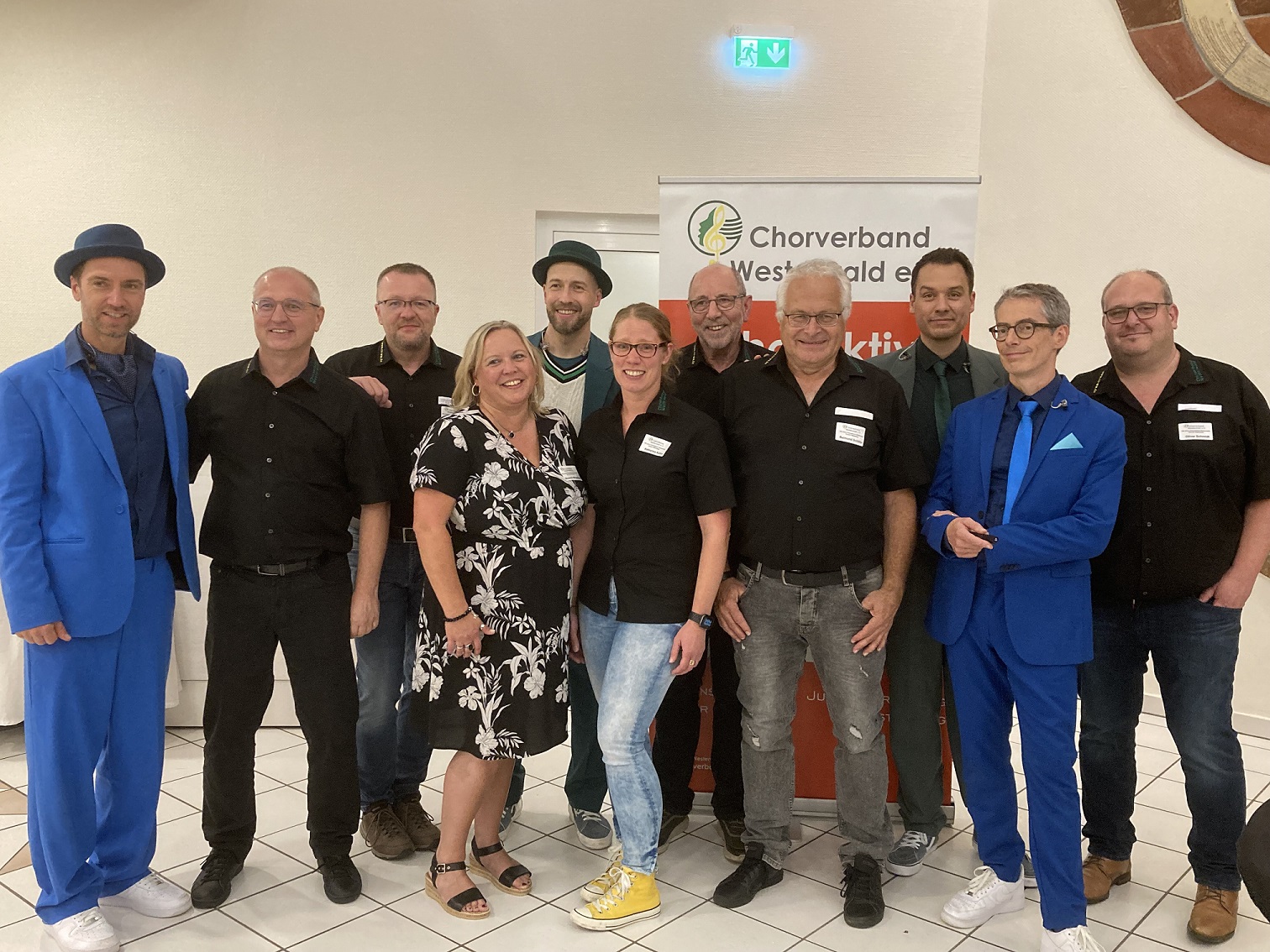
Parts of the board of the choir association Westerwald together with Maybepop after the concert in September 2023 on the occasion of the 100th anniversary
In addition to these events, the Westerwald Choral Association also had new ideas for introducing children to choral singing. The choir classes project gave birth to a measure whereby choirmasters go to primary schools every week and actively sing with the children there. In cooperation with the Westerwaldkreis, I conducted a survey at the primary schools of the Westerwald, which primary schools are interested in this cooperation. More than 20 elementary schools have shown interest here and were involved in the choir class project in the school years after the end of the corona crisis. This project was accompanied by a training measure of the choir association, in which elementary school teachers were able to qualify by choirmasters accordingly, how to actively sing with the children in a child-friendly manner. A great overall project of the choir association, which has already found imitators beyond the Westerwald. In 2026, the choir association Westerwald was able to record a novelty. For the first time in the club's history, the club's management was given into female hands. Dr. Tanja Machalet, Meudt-Dahlen, took over the management of the association from Alfred Labonte. With it, the choir association wins one of the very committed fighters for the cause of choral singing, which has the best connections to many political, social and economic decision-makers, who will certainly benefit the choral singing in the Westerwald and the association work in the choir association Westerwald.
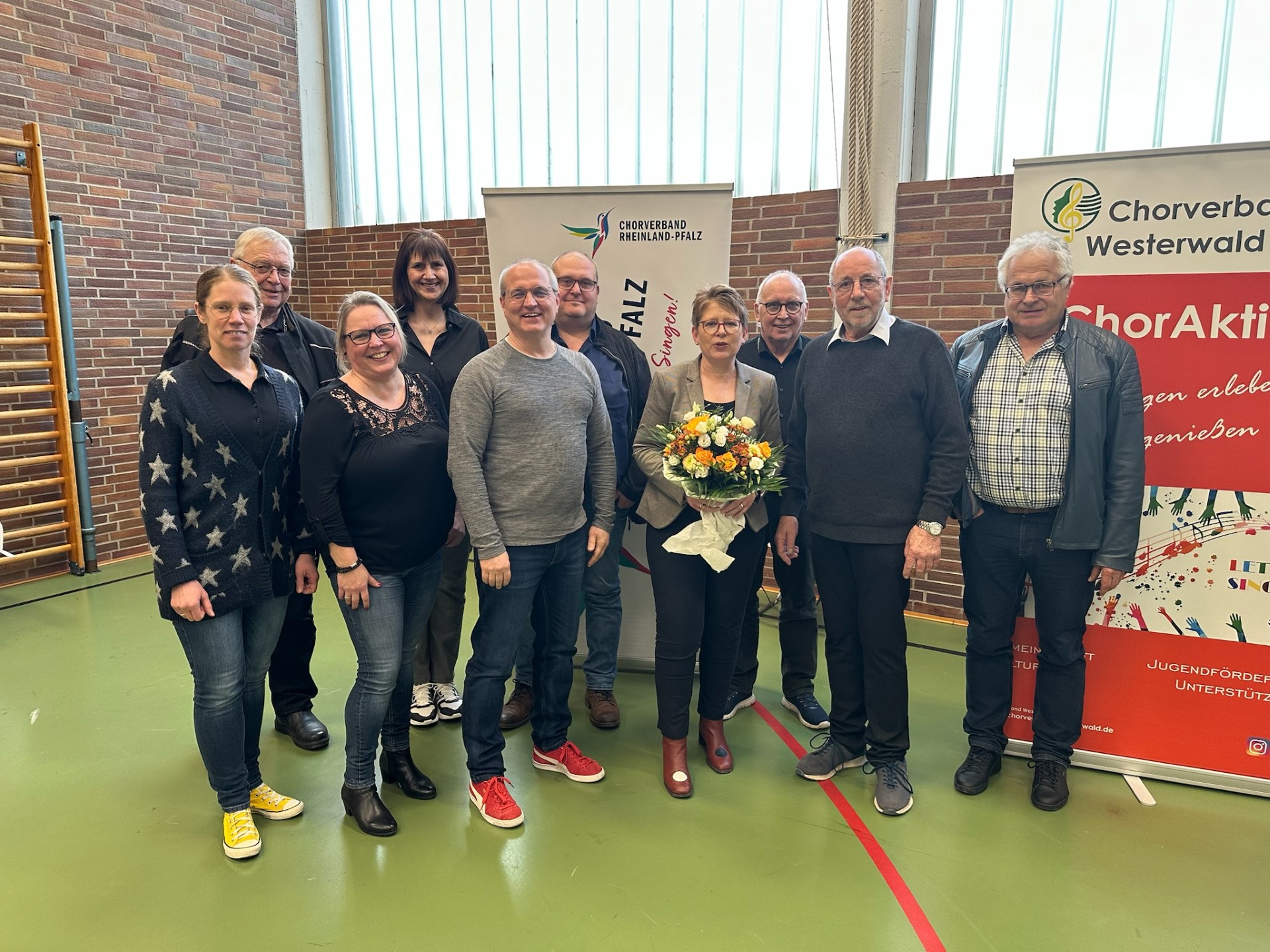
Election Dr. Tanja Machalet as the new head of the Westerwald Choir Association at the Association Day on 01.03.2026 in Hattert
from left to right Katharina Kühn, Paul Heusinger, Melanie Mingebach, Claudia Hartenstein, Mario Siry, Oliver Schmidt, Dr. Tanja Machalet, Lothar Riebel, Alfred Labonte (Chairman of Honour), Raimund Schäfer
 English (UK)